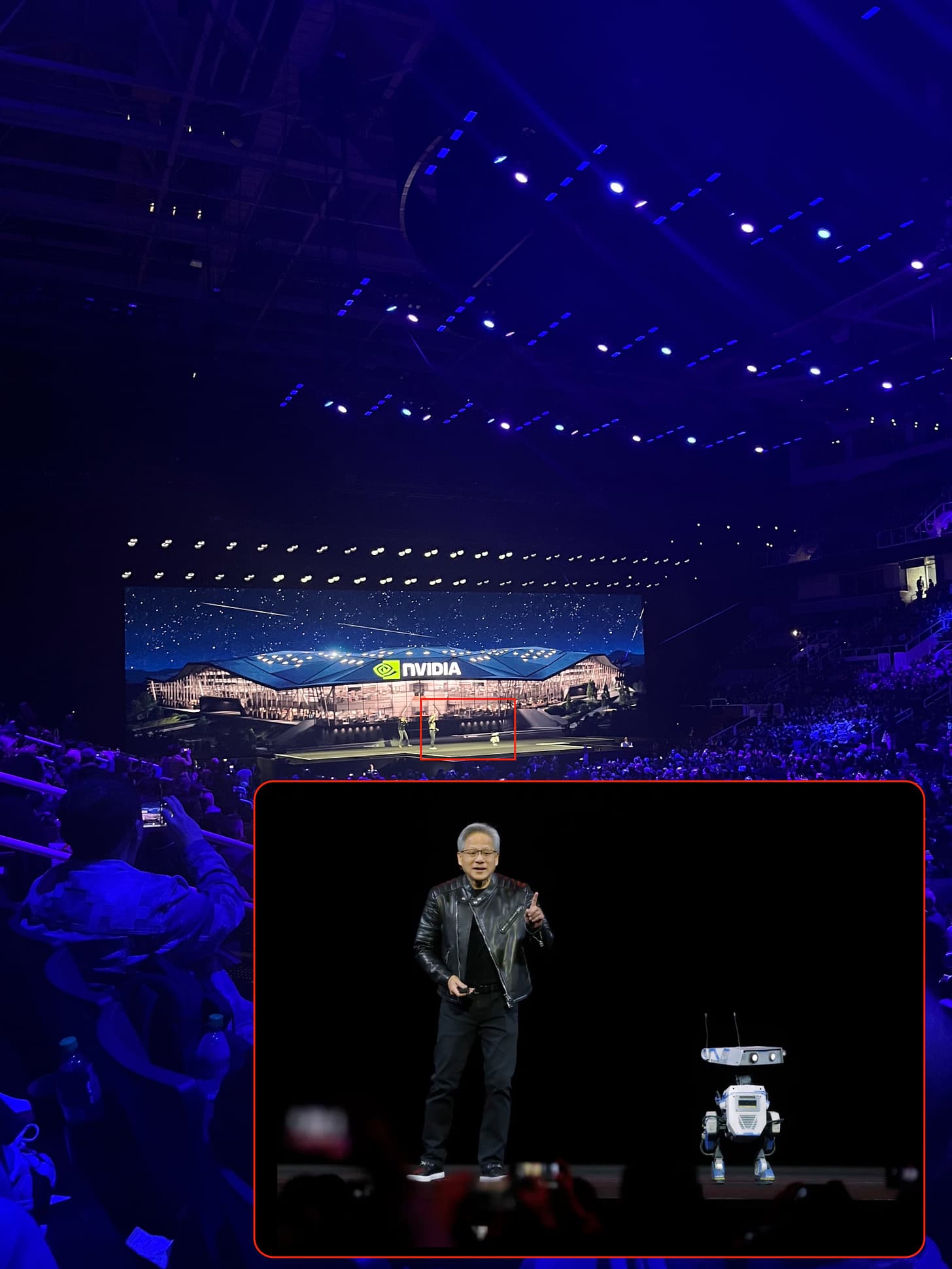
At the J.P. Morgan Healthcare Conference in January 2026, NVIDIA and Eli Lilly announced the creation of a first-of-its-kind AI co-innovation lab, with plans to invest up to $1 billion over five years in talent, infrastructure, and compute. The lab, based in South San Francisco, will co-locate Lilly domain experts in biology, chemistry, and medicine with NVIDIA's top AI researchers and engineers to tackle some of the most enduring challenges in pharmaceutical R&D.
A New Model for Pharma-Tech Collaboration
The co-innovation lab represents a departure from traditional pharmaceutical partnerships with technology companies, which typically involve licensing software or cloud computing services. Instead, NVIDIA and Lilly scientists and engineers will work side by side in a shared physical space, jointly developing new AI models, generating large-scale biological data, and building the computational infrastructure needed to accelerate every stage of drug development.
Technical Architecture
The lab's infrastructure will be built on the NVIDIA BioNeMo platform and the NVIDIA Vera Rubin architecture. Lilly has also deployed what it describes as the world's largest and most powerful AI factory for drug discovery, powered by NVIDIA Blackwell-based DGX SuperPOD systems. The facility will operate under a scientist-in-the-loop framework, where agentic wet labs are tightly connected to computational dry labs in a continuous learning system, enabling experiments, data generation, and AI model development to continuously inform and improve one another.
Scope Beyond Drug Discovery
While drug discovery is the primary focus, the partnership extends across the full pharmaceutical value chain. The companies will also work to apply AI across clinical development, manufacturing, and commercial operations, integrating multimodal models, agentic AI, robotics, and digital twins. Lilly's Chief Information and Digital Officer emphasized that AI's impact on pharma goes far beyond discovery, with significant opportunities to improve trial execution, manufacturing quality, and supply chain efficiency.
Strategic Context
The announcement reflects a broader trend of major pharmaceutical companies making transformative investments in AI infrastructure. Lilly, currently one of the world's most valuable pharmaceutical companies, is betting that AI-native drug discovery will become a decisive competitive advantage. For NVIDIA, the partnership validates the expansion of its GPU computing ecosystem from tech into the life sciences, with BioNeMo becoming a standard platform for molecular simulation, protein design, and generative chemistry across the pharmaceutical industry.
Industry Implications
The $1 billion commitment is one of the largest investments by a pharmaceutical company in AI infrastructure to date. Industry observers note that the lab's scientist-in-the-loop model, combining automated experimentation with continuous AI model refinement, could establish a new template for how large pharma companies integrate AI into their R&D operations. If successful, the collaboration could demonstrate that tight integration between domain expertise and AI engineering produces better drug candidates faster than either capability alone.